
Because after waiting all that time, you want good bananas! 🍌
Growing a banana plant is relatively easy in much of Australia. Growing a banana plant that produces a big, healthy bunch of plump, sweet fruit takes a little more effort.
You can plant a banana, largely ignore it and quite possibly still end up with bananas.
But if you’ve spent months watching your plant grow, checking the emerging flower and proudly showing everyone your first bunch, it seems a shame to finish with a collection of skinny little bananas that never quite live up to expectations.
The good news is that backyard growers can do quite a lot to improve fruit size, bunch quality and ultimately the eating quality of their bananas.
And most of it isn’t particularly complicated.
Sunshine is your banana’s best friend ☀️
If you’re deciding where to plant a banana, don’t give it the forgotten shady corner of the backyard.
Bananas perform best with plenty of sunlight. Good light helps drive photosynthesis, which provides the energy the plant needs to grow that enormous stem, produce a bunch and fill the developing fruit.
A protected sunny position is particularly valuable.
The word protected is worth remembering. Banana leaves are enormous — which unfortunately also makes them very effective sails.
Strong winds can shred the leaves and damage plants. A few torn leaves are perfectly normal, but a constantly wind-battered plant has less healthy leaf area available to support its developing bunch.
Sun = good.
Sun plus shelter from wind = even better.
Don’t let your banana go thirsty
If there’s one thing bananas aren’t particularly good at, it’s pretending they don’t need water.
They’re thirsty plants.
A mature banana has an enormous amount of soft green foliage and loses considerable moisture through those leaves. Water availability becomes particularly important while the bunch is developing and the individual bananas are filling.
Long periods of dry soil followed by occasional massive watering aren’t ideal.
Aim instead for consistent soil moisture, particularly during warm weather and fruit development.
That doesn’t mean turning the backyard into a swamp. Bananas like water, but their roots also require oxygen and prolonged waterlogging can cause problems.
Think: Moist, not boggy.
A good layer of mulch around the plant makes this job much easier by reducing evaporation and helping maintain a more even soil moisture level.
Feed the hungry beast
If you’ve ever wondered how a relatively small sucker turns into a plant several metres tall and then produces a huge bunch of fruit in such a short period, the answer is partly:
It eats. A lot.
Bananas are heavy feeders.
Nitrogen is particularly important during vegetative growth because the plant needs to produce plenty of healthy leaves. But once you’re aiming for good fruit production, potassium becomes particularly important.
Potassium plays an important role in banana fruit development and quality, and inadequate potassium can contribute to poor bunch development and smaller fruit.
A fertiliser suitable for bananas or other fruiting plants is therefore preferable to simply throwing high-nitrogen lawn fertiliser around them.
Regular smaller applications during active growth are generally better than remembering twice a year and giving the poor plant half a bag at once.
And always follow the fertiliser manufacturer’s application rates.
More fertiliser does not automatically mean more bananas.
Sometimes it just means more expensive fertiliser disappearing past the root zone.
Give them some organic matter
Bananas appreciate rich soil.
Compost, aged manure and other suitable organic material can help improve soil structure, nutrient availability and moisture retention.
And banana plants themselves provide plenty of material.
When you remove old leaves or eventually cut down a stem after harvesting, healthy banana material can be chopped up and composted or used appropriately around the garden.
Bananas are essentially very large herbaceous plants, so there’s a surprising amount of organic material in one mature pseudostem.
Your banana can therefore spend part of its retirement feeding the next generation.
Rather considerate of it, really.
Don’t let the family get out of control
One banana plant rarely stays one banana plant for long.
Before you know it, Mum has children, grandchildren and assorted relatives all fighting for the same water and nutrients.
Allowing too many suckers to grow around the parent plant creates competition.
For backyard growing, a useful approach is to maintain a mother, daughter and follower — essentially the fruiting or mature plant, a strong sucker being allowed to replace it, and a younger sucker coming behind that.
Remove unwanted suckers rather than allowing the clump to become overcrowded.
The idea is simple: concentrate the plant’s resources into the stems you actually want to produce fruit rather than supporting a banana jungle.
And as discussed in our sucker-growing article, choose a good strong sword sucker when selecting the next generation.
Keep plenty of healthy leaves on the plant
Those enormous banana leaves aren’t there just to make your backyard look tropical.
They’re the plant’s solar panels.
The developing bunch depends on the remaining healthy leaves to manufacture carbohydrates. So don’t become overly enthusiastic with the secateurs once fruit appears.
Remove leaves that are completely dead, badly damaged or diseased, but retain healthy functioning leaves wherever possible.
A slightly tatty green leaf is still doing a job.
Your banana plant doesn’t need to win a garden beauty contest while it’s filling its fruit.
Protect the bunch 🍌
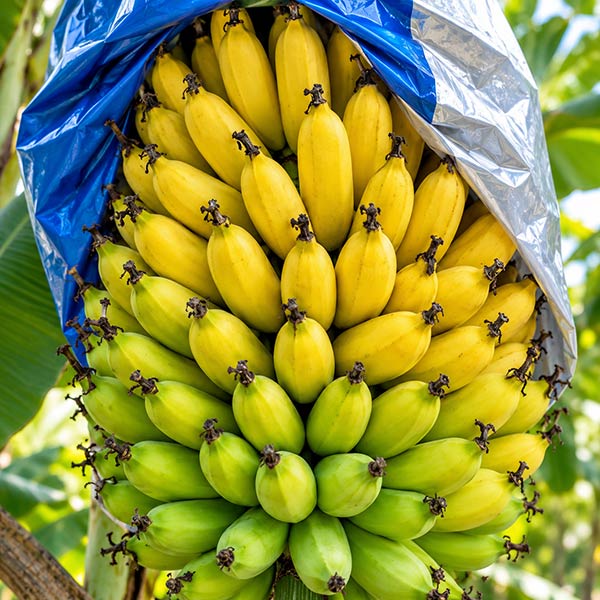
Once your bananas appear, you’ve reached the stage where a banana fruit bunch cover becomes particularly useful.
A properly fitted banana bunch cover helps create a more protected environment around the developing fruit and provides physical protection from birds, flying foxes, insects, rubbing and minor weather damage.
It can also help produce fruit with a cleaner, more attractive skin.
For the backyard grower, it’s essentially putting a protective jacket around the crop you’ve spent months growing.
Our blue and silver Banana Fruit Bunch Covers are designed for exactly this purpose.
Fit the cover after the bunch has formed and the fingers have begun turning upwards. Secure the top loosely around the bunch stalk while leaving the bottom open for ventilation and drainage.
And if you’re using a reflective silver cover, position it according to the product instructions so the reflective surface provides the intended sun protection.
This is one of the simplest things a backyard grower can do to help protect the developing bunch.
Consider removing the banana bell at the right time
That big purple flower dangling beneath your developing bunch is commonly called the banana bell or male bud.
Once the final useful hand of bananas has developed, some growers remove the remaining bell and stalk below the bunch.
Commercial banana production commonly includes bunch management practices such as bell removal, although whether it materially improves fruit size in a particular backyard plant isn’t as clear-cut as sometimes claimed.
For the backyard grower, it’s reasonable to remove it once you’re confident no more useful hands are developing — but don’t expect chopping off the flower to suddenly turn ordinary bananas into monsters.
Water, nutrition, leaf area and overall plant health matter much more.
Sometimes fewer bananas can mean better bananas
This sounds counterproductive.
We’re trying to grow more bananas, aren’t we? Not necessarily.
We’re trying to grow good bananas.
On a bunch carrying a very large number of hands, the last hands to develop can contain smaller fruit. Commercial banana growers sometimes remove the lowest hands so the plant’s resources are concentrated into the remaining fruit.
For most backyard bunches, you don’t need to interfere.
But if your plant has produced a particularly large bunch and the bottom hands are obviously tiny and poorly developed, removing one or two of the smallest bottom hands may help concentrate resources into the better-developed fruit.
It’s very much an optional technique rather than something every backyard banana grower needs to do.
Support a heavy bunch before gravity wins
A good bunch of bananas can become surprisingly heavy.
Unfortunately, the banana plant tends to reveal this fact approximately five seconds after a storm arrives.
As the bunch fills, inspect the plant and consider supporting the fruiting pseudostem with a sturdy prop if it’s leaning or carrying a particularly heavy bunch.
This becomes even more important in exposed positions.
Losing a beautiful bunch a few weeks before harvest because the plant snapped over is the sort of gardening lesson you generally only need once.
Don’t pick them too early
You’ve successfully grown the plant. You’ve watered it.
You’ve fertilised it. You’ve protected the bunch.
You’ve stared at it every morning for months!You’ve stared at it every morning for months.
Now don’t ruin everything by becoming impatient. Get the timing right.
Bananas gradually become fuller and rounder as they mature. Young bananas have noticeably angular sides; as they fill, those angles become less pronounced and the fingers become plumper.
For many varieties, backyard bananas are harvested while still green but physiologically mature and then allowed to ripen after harvest.
You don’t necessarily need to wait until the entire bunch turns bright yellow on the plant.
In fact, allowing fruit to ripen fully on the plant can increase the opportunity for wildlife to discover your crop before you do.
Let them ripen properly
Here’s where we get to the bit everyone cares about:
How do I make my bananas sweeter?
A lot of the sweetness develops during ripening, when starch in the fruit is converted into sugars. That’s why an immature green banana is starchy and fairly uninspiring while a properly ripened banana is soft, aromatic and sweet.
Allow mature harvested bananas to ripen naturally at room temperature.
Putting them near ripe fruit can speed things along because ripening fruit produces ethylene, a natural plant hormone that encourages ripening.
And don’t judge your backyard bananas by supermarket appearance alone.
Home-grown bananas may be smaller, have marks on their skins and ripen somewhat unevenly. Then you peel one, and suddenly nobody cares what the skin looked like!
The simple recipe for better backyard bananas
If you remember nothing else from this article, remember these six things:
☀️ SUN — give your plant plenty of light.
💧 WATER — maintain consistent moisture, particularly while fruit is filling.
🌱 FOOD — bananas are hungry plants; provide appropriate nutrition, including adequate potassium.
🍃 LEAVES — retain healthy leaves to power fruit development.
✂️ SUCKERS — don’t let an overcrowded clump compete with itself.
🍌 PROTECTION — protect your developing bunch with a suitable banana fruit bunch cover.
None of these will magically guarantee an enormous bunch every time. Variety, temperature, soil, pests, disease and weather all have a say.
But stack enough of these factors in your favour and you’ve given your banana plant a much better chance of producing the big, full and great-tasting bunch you were hoping for.
And when you’re finally standing in the backyard holding your first home-grown hand of bananas, you’ll probably come to the same conclusion as most banana growers: One banana plant might not be enough! 🍌🌱